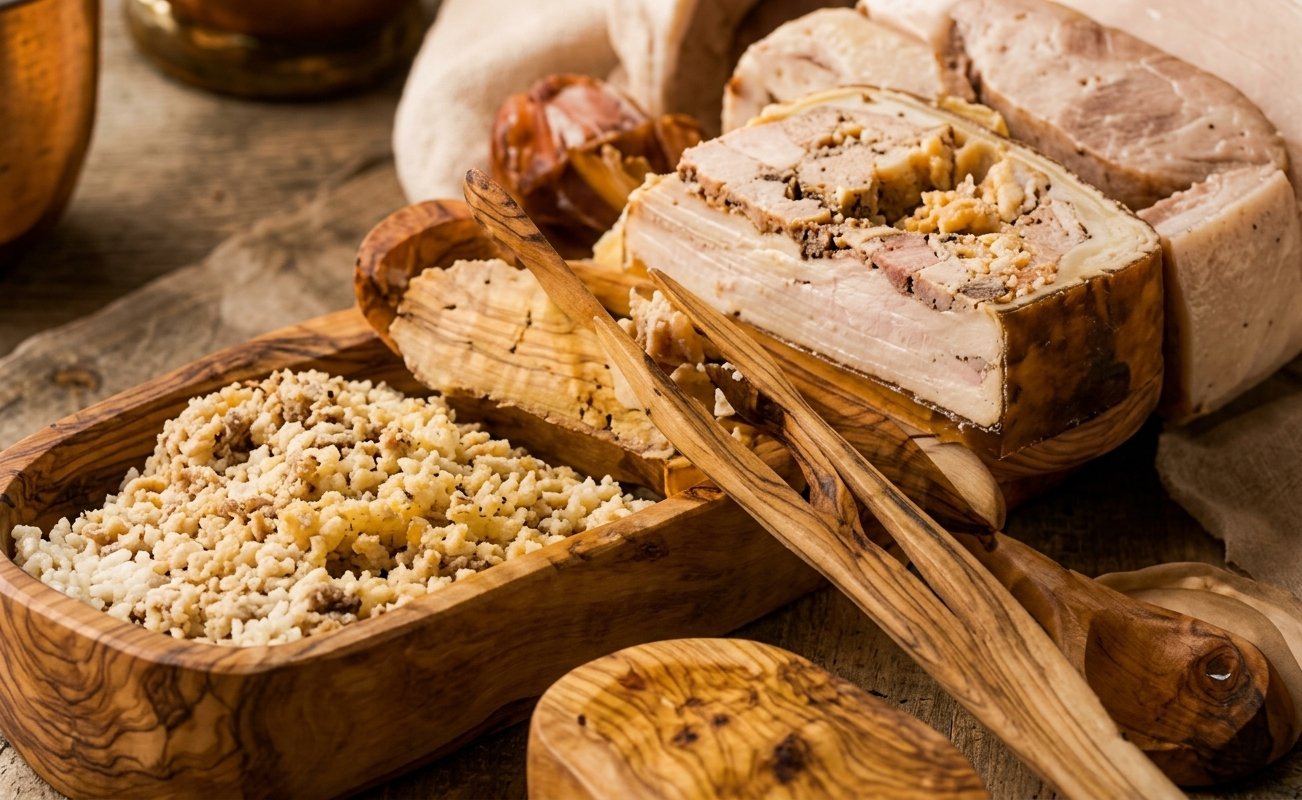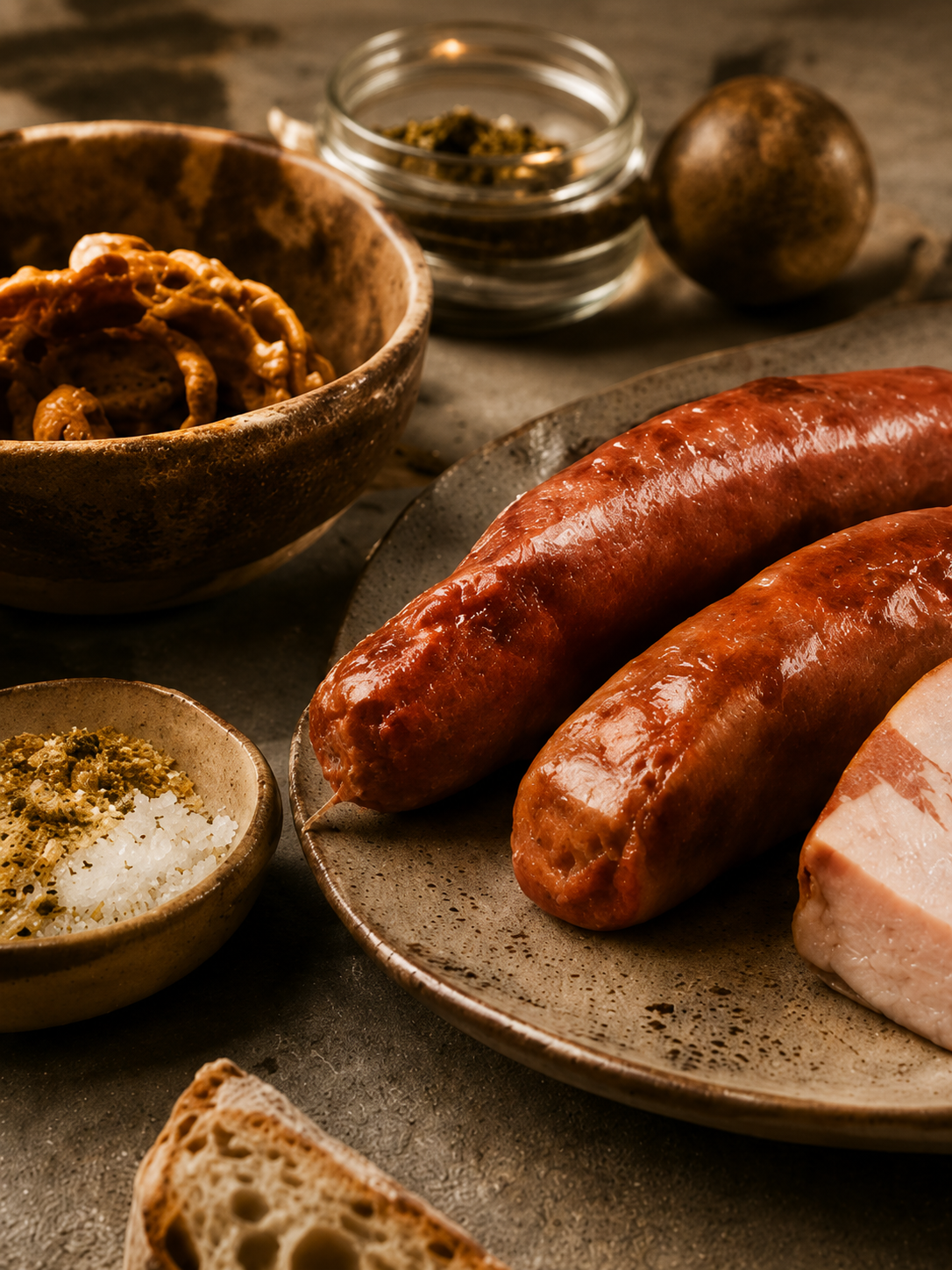
Guanciale is a traditional Italian cured meat made from pork cheek or jowl. Its name comes from the Italian word guancia, meaning cheek. Rich, tender and deeply flavoured, guanciale is one of the essential ingredients in several classic Roman pasta dishes.
Unlike pancetta, which is made from pork belly, guanciale comes from a fattier and more delicate part of the pig. It is usually seasoned with salt, black pepper and sometimes herbs before being air-dried for several weeks.
How Is Guanciale Used?
Guanciale is most famously used in Pasta alla Carbonara, Amatriciana and Gricia. When gently cooked, its fat slowly melts and creates a rich, savoury base for the sauce.
The meat itself becomes crisp around the edges while remaining tender in the centre. This combination gives pasta a depth of flavour that is difficult to recreate with ordinary bacon.
Guanciale, Pancetta and Bacon
Although guanciale, pancetta and bacon are all cured pork products, they are not the same.
Guanciale has a richer texture and more intense flavour because it comes from the pork cheek. Pancetta is made from pork belly and has a milder taste. Bacon is usually smoked, while traditional guanciale is generally not smoked.
How to Cook Guanciale
Cut the guanciale into small strips or cubes and place it in a cold pan. Cook it slowly over medium-low heat, allowing the fat to melt gradually. Once the pieces become golden and crisp, they can be combined with pasta, cheese and other ingredients.
For the best result, avoid adding too much oil. Guanciale naturally releases enough fat to flavour the dish.
Final Note
Guanciale is more than just a cured meat. It is an ingredient that reflects the simplicity and precision of Roman cooking. Used carefully, a small amount can transform a simple pasta dish into something deeply satisfying.