Parmigiano Reggiano and Parmesan are often used as if they are the same cheese, but there is an important distinction between them. Both are hard, granular cheeses that are commonly grated over pasta, risotto and vegetables. However, only one of them comes from a protected Italian tradition.
What Is Parmigiano Reggiano?
Parmigiano Reggiano is produced in specific areas of northern Italy, including Parma, Reggio Emilia, Modena, Mantua and Bologna. It is made according to strict production rules and must mature for a minimum period before it can be sold.
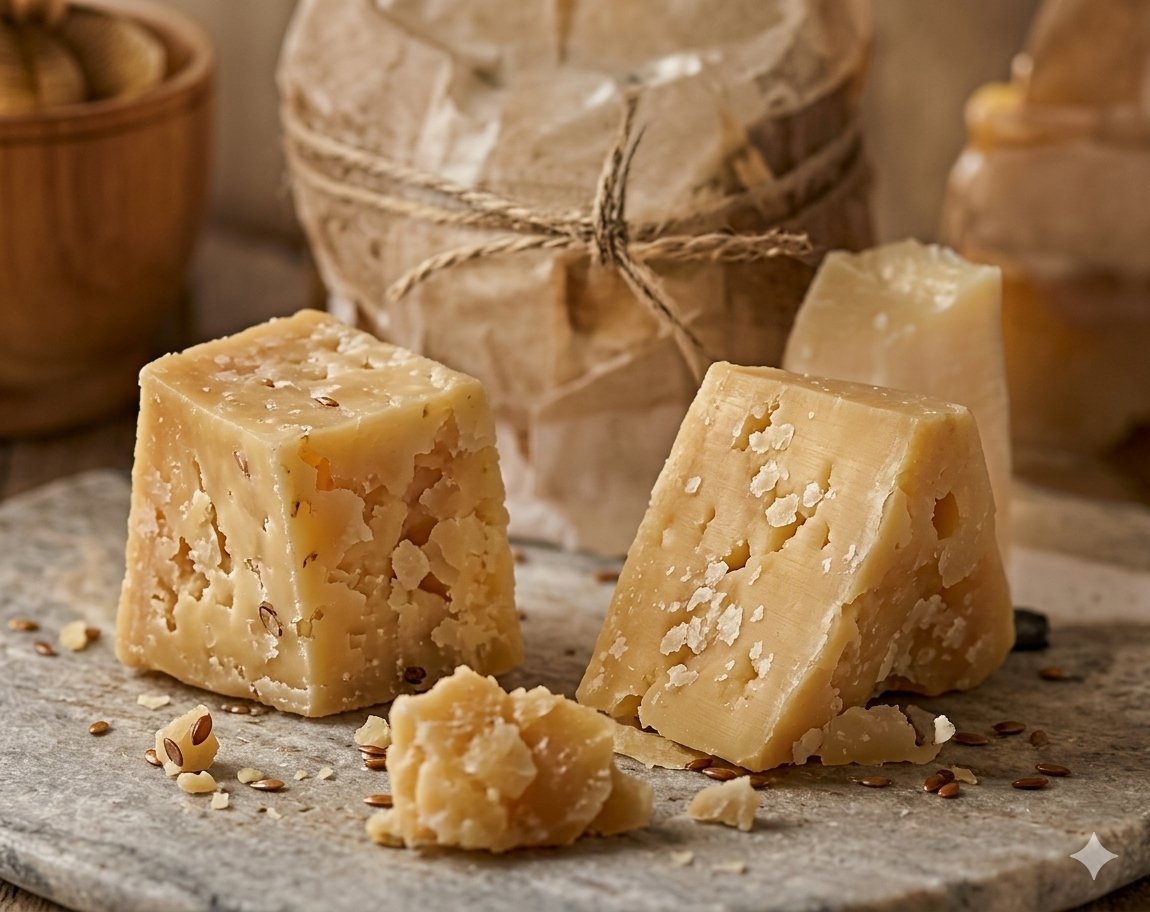
The cheese has a firm texture, a complex savoury flavour and small natural crystals that develop during ageing. Younger Parmigiano Reggiano is delicate and milky, while older versions are more intense and crumbly.
What Does Parmesan Mean?
“Parmesan” is a general name used for cheeses that are inspired by Parmigiano Reggiano. These cheeses may be produced outside the official production area and may follow different recipes or ageing methods.
Some Parmesan-style cheeses are excellent, while others may have a milder or saltier flavour. The quality can vary depending on the producer.
Which One Should You Use?
For classic Italian recipes, Parmigiano Reggiano is usually the best choice. Its balanced flavour works especially well in:
- Fresh pasta
- Risotto
- Pesto
- Soups
- Salads
- Vegetable dishes
A younger cheese is suitable when you want a softer and milder taste. An older cheese is ideal when you want a stronger flavour or plan to serve it in pieces.
How to Store It
Keep Parmigiano Reggiano wrapped in paper or placed in an airtight container in the refrigerator. Avoid storing it directly in plastic wrap for long periods, as the cheese needs a little air to maintain its texture.
Final Note
Parmigiano Reggiano and Parmesan can both be useful in the kitchen, but they are not identical. Understanding the difference helps you choose the right cheese for the flavour and texture you want.